
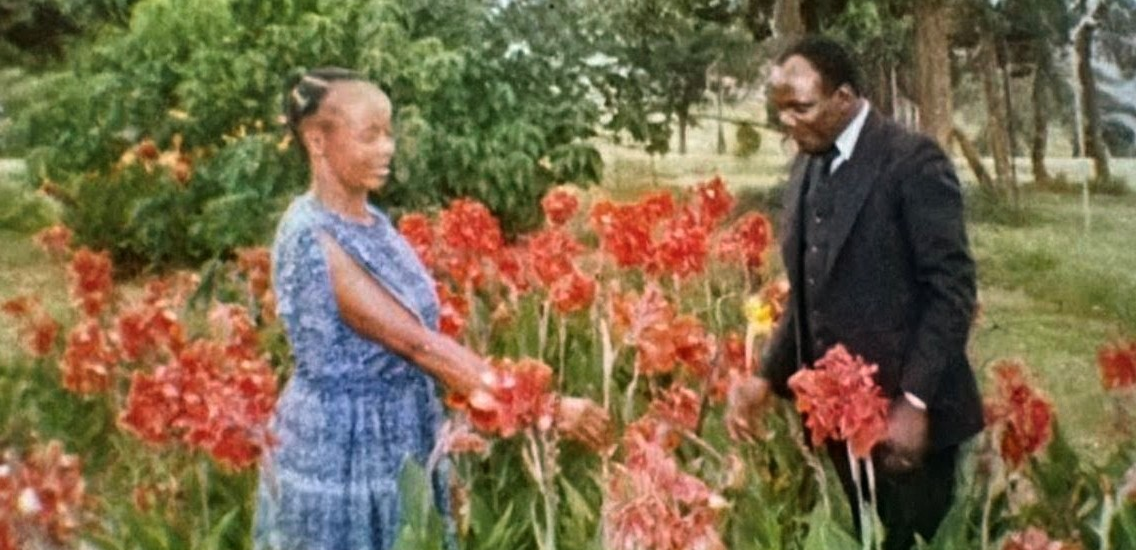
A Legacy Rooted in Tea
The story of Bengayi Tea begins long before the company itself was established. It is a story of resilience, sacrifice, generational knowledge, and a lifelong connection to tea. At its heart is Wilson Bengayi Kumbula, whose life and career became the inspiration for the creation of the Bengayi Tea brand.
Bengayi Tea is named in honor of Wilson Bengayi Kumbula, the father of Lawrence Khumbula, founder of Bengayi Wilson (Pty) Ltd. The values that define the brand today, perseverance, quality, hard work, and excellence, are drawn directly from Wilson’s extraordinary journey through the tea industry.
Humble Beginnings in Rural Zimbabwe
Wilson Bengayi Kumbula was born in Mabee, a remote and underdeveloped village in Zimbabwe(then called Rhodesia) under a colonial government that effectively ran its affairs on an apatheid system. Opportunities for indigenous people were extremely rare. He was the second-born child and first son in a family where resources were extremely limited. His father was a polygamist, and providing education for all children was a challenge.

At the time, cultural beliefs often discouraged investment in girls’ education. Several of Wilson’s sisters were denied the opportunity to attend school because it was believed that educating girls was financially wasteful. Against this backdrop of poverty and social limitations, Wilson’s pursuit of education became a remarkable story of determination and hope.
When it was time for him to begin school, his mother made a courageous decision that would alter the course of the family’s future. While Wilson’s father was away working in the South African mines a migrant labourer, she sold a goat to pay his school fees, defying cultural norms that prohibited women from selling livestock without their husband’s consent. When Wilson was finally able to start school, the family’s poverty was so severe that they could not afford proper clothing.
On his first day, he had virtually nothing to wear. Determined that her son would not miss the opportunity to receive an education, his mother tore pieces from her own undergarments and fashioned a simple covering for him. It was a deeply sacrificial act that reflected her unwavering belief that education could change the course of his life.
This moment became symbolic of the hardships Wilson overcame and the sacrifices that laid the foundation for future generations. The values of perseverance, resilience, and the pursuit of opportunity despite overwhelming challenges would later become central to both his life and the ethos of Bengayi Tea.
The Journey to Zona Tea Estate
As the family could no longer afford school fees, Wilson faced the possibility of abandoning his education. Refusing to give up, he undertook a long and dangerous journey on foot to Zona Tea Estate, travelling through forests, mountains, and thick bush. The journey was particularly dangerous during that era, with threats from wild animals like hyenas and the harsh conditions of the wilderness.

Zona Tea Estate, part of Tanganda Tea Company, offered disadvantaged children a rare opportunity through a work-study programme. Children worked in the tea fields during the day mainly plucking tea and attended classes in the evenings. To be clear, the quality of education offered was of low standard due to the colonial system, the labour that the children provided was more important than the education itself – the children were simply seen as source of cheap labour.
Wilson seized this opportunity regardless, he knew he needed to start somewhere
The conditions were far from easy. Children lived in basic dormitories which were kind of inhumane, worked long hours in the tea fields regardless of weather conditions, and received modest meals that were often of poor quality. The maize meal, cabbage and beans would have worms. Corporal punishment by superiors was common place. Despite these hardships, Wilson remained committed to completing his education.
The experience taught him discipline, resilience, endurance, and an unwavering commitment to improving his circumstances. These qualities would later define his leadership within the tea industry.
Building a Career in Tea
After completing Standard 6, Wilson was unable to continue to high school because of financial constraints. Instead, he chose to remain within the tea industry and sought employment at Zona Tea Estate.
Recognized for his intelligence and strong work ethic, he secured a position as a Field Clerk. From there, he steadily worked his way through the ranks.
Seeking further advancement, Wilson later joined New Year’s Gift Tea Estate, a sister company with similar educational and development programmes. There he served as a Senior Clerk and continued building his knowledge of tea cultivation and estate management.
It was during this period that he met Betty Matangi, a young woman who, like him years earlier, worked in the tea fields during the day and studied at night. The two eventually married and went on to have seven children, the first-born being Lawrence Khumbula.
A Lifetime Dedicated to Tea
Apart from a brief period of approximately one year, Wilson spent his entire professional life in Zimbabwe’s tea industry.

Over the decades, he rose through the ranks to become an Estate Manager, one of the highest operational positions within the industry. He also served as a Tea Factory(Production) Manager, gaining deep expertise across every stage of tea production.
He worked in tea estates like Katiyo, Aberforyle, Eastern Highlands Tea Estates, Jersey, Ratelshoelk, Southdown etc.
Wilson’s knowledge extended from nursery cultivation and field management to harvesting, factory processing, manufacturing, and grading. His understanding of tea was so comprehensive that he could identify production flaws simply by tasting a cup of tea and explain exactly where in the manufacturing process the issue had occurred.
His expertise was developed through decades of hands-on experience and became an invaluable source of knowledge for those around him.
The Influence on Lawrence Khumbula
Growing up on tea estates, Lawrence and his siblings were immersed in the tea industry from an early age.
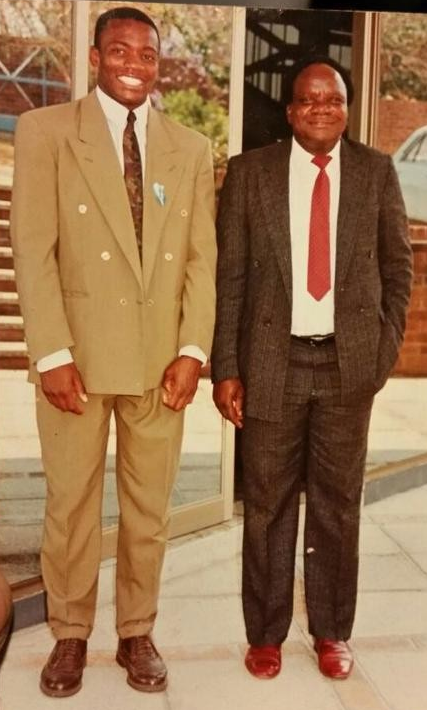
Wilson Bengayi Snr, and Bengayi Jnr. now the advisor for Bengayi Wilson Company
They accompanied their father into the tea fields, observed estate operations, and spent time in tea factories while production was underway. Through these experiences, Lawrence developed a practical understanding of tea cultivation and manufacturing that few entrepreneurs gain firsthand.
For Lawrence and his siblings, the aroma of black tea became inseparable from memories of their father and his life’s work.
One event particularly symbolized Wilson’s journey. As a young student at Zona Tea Estate, he once assisted builders in digging the foundations for a house intended for senior management. Years later, after rising through the ranks, he returned to the same estate as Factory Manager and was allocated that very house as his family residence, living there with his family. At the time, Lawrence was a teenager..
This powerful full-circle moment demonstrated the transformative impact of perseverance, education, and hard work.
The Birth of Bengayi Tea
Years later, after relocating to South Africa, Lawrence Khumbula recognized an opportunity to build a tea business founded on authentic industry expertise and a rich family heritage.
Motivated by the knowledge passed down from his father and inspired by his lifetime in the tea-growing environment, Lawrence established Bengayi Wilson (Pty) Ltd.
The company’s vision is clear:
To source high-quality African black tea, create distinctive blends, package them professionally, and bring them to market under a proudly African brand.
Before launching the products, Lawrence consulted extensively with his father. Together, they evaluated established tea brands available in the market and analysed their characteristics.
Drawing on decades of tea manufacturing expertise, Wilson advised on blending techniques and flavour profiles that would differentiate Bengayi Tea from existing brands. He recommended the development of smoother, lighter tea profiles that would appeal to consumers seeking a refined tea-drinking experience.
This guidance became the foundation of Bengayi Tea’s product development strategy.
The Bengayi Tea Difference
Today, Bengayi Tea reflects more than a commercial opportunity. It represents generations of knowledge accumulated through a lifetime in the tea industry.
The company’s flagship products, Le Noir and Naka, embody the blending philosophy developed through Wilson’s expertise. Both are intentionally crafted as lighter, smoother teas, with Le Noir offering a slightly stronger profile of the two.
Every pack of Bengayi Tea carries the legacy of a man who began as a disadvantaged child working in tea fields to obtain an education, rose to become an industry leader, and passed his knowledge on to the next generation.
Wilson Bengayi Kumbula, passed on in 2021.
Investment Perspective
Bengayi Tea is not a brand created from a marketing concept alone. It is built upon:
- Multi-generational tea industry knowledge.
- Direct experience across the tea value chain, from cultivation to manufacturing.
- Authentic African tea heritage.
- A compelling founder story rooted in resilience and perseverance.
- Differentiated product formulations developed with decades of practical tea expertise.
- A vision to build a proudly African tea brand with local and international market potential.
The company’s foundation combines heritage, expertise, authenticity, and commercial ambition, positioning Bengayi Tea as a brand with both a powerful story and a credible path for growth.